Sabtu, 26 Maret 2016

Travel Tech: 10 Must-Pack Gadgets for Geeks on the Go

By : Amy-Mae Elliott

While so many "must-have" travel gadgets from days of yore have been ousted by apps, there is still a lot to be said for some seriously handy hardware to take with you on your next trip.

So, you may no longer need a travel alarm clock, but more-connected consumers need to find new ways to work longer, pack smarter and heck, even have a little fun on the road.

Here, we bring you our 10 favorite travel gadgets, gizmos and tools, so take a trip through the gallery to see our recommendations for the geek on the go and, as always, let us know yours in the comments below.

 1. Grid-It
You won't believe how tidy your laptop bag can be until you try the Grid-It organization system. Made up of a weave of rubberized elastic bands, it holds small objects, their respective chargers and whatnot, neatly in place. This simple-but-brilliant system means you can find what you're looking for without tipping out the contents of your bag in frustration.
Cost:$22
2. Heys eCase
This back-friendly wheelie case will save your shoulders from strain while offering carry-on-safe dimensions, as well as a three-digit combination TSA lock should you check it in. With accordian-type pockets, the eCase can keep files and folders separate from clothing and other personal items. A padded laptop sleeve rounds off the rather tidy package. Truly a hero-in-a-hardshell, the eCase comes in a variety of colors and designs
Cost:$119.97
3. Targus Premium Laptop Charger
This is like your existing, standard issue laptop charger brick, but so much better. About the size of a BlackBerry and boasting a seriously sleek design, the Targus charger will power both your laptop and one other mobile device from a wall socket, on a plane or in a car. If you can afford it, ditch the brick and we're sure you won't look back.
Cost:$139.99
4. Lewis N.Clark Belle Hop Travel Door Alarm
For anyone who can never quite get a good night's sleep in a hotel room due to security worries, this gadget can help allay those fears a little. Its high-pitched 91-decibel alarm will alert you if your hotel room door is opened. Just don't forget to disengage it before you answer the door to room service.
Cost:$11.99
5. Logiix USB Power Cube
This teeny cube-shaped USB charger features a plug design that folds up when not in use so it won't take up too much space in your luggage. It's perfect for quick-charging a USB-powered gadget when you don't have the time to get your laptop out.
 Cost:$30
6. Heys xScale Pro
Anyone who has been stung for overweight charges will see the value in the xScale PRO. This portable gizmo will weigh luggage of up to 110lbs (50kg) so you can ensure you're on the right side of safe before you hit the scales.
Cost:$24.97
7. CyberPower Extension Power Cord
For the true gadget-lover, an extension cord is a must-have travel accessory. If you're traveling to foreign climes, then an extension cord will mean you only need one adapter and you can juice three gadgets at once. For domestic travelers it instantly solves any not-enough-power-sockets-in-cheap-hotel-rooms issues. Well worth the room in your luggage.
Cost:$7.99

 8. Jawbone Jambox
For the frequent traveler, a decent speaker is a hotel room luxury that's worth splurging on. You'll certainly be rocking out with the wireless Jambox - it's a penny under $200 - but it has some great features. Although it's properly portable, it boasts an output capacity of 85 decibels and a 10-hour battery life. You can use it as a speakerphone for cellphone and VoIP calls, and it's got some amazing customization options via the MyTALK online platform.
Cost:$199.99
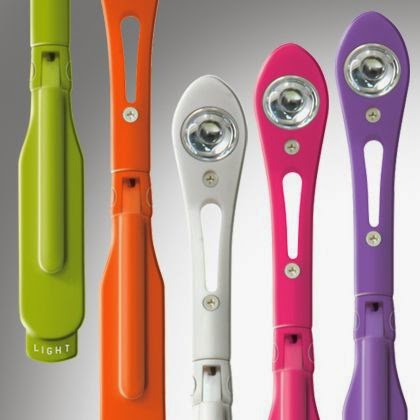
9. The Really Tiny Book Light
A truly useful item, this tiny, lightweight lamp can be clipped onto your reading material en route or in your hotel room, and offers surprisingly bright LED illumination. It also doubles as a handy small-scale flashlight to have at your bedside for those moments when you wake up and can't quite remember where the light switch is, or for that matter, where you are.
Cost:Approx $11.50
10. Philips Rechargeable Power Pack
A power pack for all your portable electronic devices, this can even keep your laptop going if you get caught short without a power supply. How long it can power a device depands on the gadget, but the claim is up to 60 hours for less power-hungry gizmos. It comes complete with 12 connector tips and a carrying case. Think of it as insurance against long travel delays so you'll be able to carry on working -- or playing -- if there's a holdup.
Cost:$TBD


Source : Mashable.com

Kamis, 10 Maret 2016

Five Major Differences Between Resorts And Hotels!

By : Rajesh B Sanghvi

There are only a handful of people around the world who know the differences between a hotel and a resort. Most of us live our life thinking that these two are similar places, wherein the travelers are provided with meals, bed and bathing facilities.

However, if you get deeper into the two concepts, you realize that there are some major differences between the two. What are these differences - you ask. Following are the five major ones that you must know about to expand the land of your knowledge:

1) Relaxation
When it comes to the feature of relaxation, resorts are said to be better in the same. If you really want to experience a trip to rejuvenate yourself completely, visit a resort, rather than visiting a hotel. Resorts are really beautiful, if you wish to experience relaxation and pure heavenly pleasures!

2) Services
There are several differences between the services provided to you at the hotel and the services provided at the resort. If it is a five star hotel, you may receive a lot of 'extra' services in the same complex. Some of the resorts may not be able to provide you different cuisines because most of them have a single kitchen only. On the other hand, five star hotels have two kitchens and multiple cuisine facilities.

3) Location
Generally, resorts are located in the midst of nature and beautiful landscapes. But when it comes to the hotels, even if they are the five star ones, they can be located or situated on the main roads as well. You don't need nature to build a lodge or a hotel.

4) Swimming pool
All the resorts have supposed to have swimming pools, compulsorily. But it is not necessary for the hotels to have pools. However, most of the five star locations do have their private pools to give add-on benefits to the visitors or travelers.

5) Reason of visit
Generally, people visit a beautiful resort in the middle of nature to enjoy their vacations and get into the recreation process. On the other hand, the reason to visit a hotel can be an official or business related one. It is not necessary that the people visit such accommodation providing places on vacations only.

Although both of these places provide the travelers with accommodation, the differences that are present can be felt by all the visitors. Even if you visit both of these, you would know the differences all by yourself.


Source : ezinearticles

Jumat, 25 September 2015

Best Western Announces Expansion of Vib Boutique Hotel Brand

Best Western International announced on Monday that it has signed deals for five new Vib boutique hotels.
Since the official announcement of the urban boutique concept last October, Vib (as in Vibrant) has eight properties under development. In addition to the previously announced hotel projects in Chicago, Miami and Seoul, South Korea, Vib will also open another 150-room Vib in Miami, as well as hotels in Los Angeles; Staten Island; Little Rock, Arkansas; and Springfield, Missouri (all 200 rooms or fewer). All eight hotels in development are slated to open by the end of 2016.
"Since the launch of Vib we have had tremendous interest from hotel developers and are especially pleased with the response from developers who have not previously developed Best Western hotels," said Ron Pohl, senior vice president of brand management for Best Western International, via a release. "Vib is really gaining traction because it is the only boutique concept designed for the upper midscale hotel segment and fills a niche that developers and customers want."
In addition to the Vib hotels under development, Best Western also announced that it is negotiating deals for the brand in Atlanta; Charlotte, North Carolina; Dallas; New Orleans; Scottsdale,, Arizona; and San Diego.
Best Western’s latest move with Vib exemplifies how the hotel industry is shifting, as more and more hotel companies—big and small—attempt to meet rising guest demand for boutique hotel offerings. What was once a niche concept has now attracted a mainstream audience, and hotel companies tend to be quick to respond when they see a big opportunity.
Vib focuses on a lot of boutique-centric elements that are popular, including social engagement, technology, a high level of service and innovative design. It also claims to have a minimal footprint, which stands to resonate well with a world that appears to be more environmentally conscious these days.
The fact that global hospitality companies like Best Western are placing more of an emphasis on the boutique hotel is proof that the concept is more valid than ever. As the world gets bigger, hotels—interestingly enough—appear to be getting smaller.

Rabu, 23 September 2015

Younger travelers an emerging force in luxury spending

Travelers who use agents to book their trips continue to be the biggest spenders, according to Travel Weekly's annual Consumer Trends survey. But the latest report and other recent research show a surprising shift in who it is that's doing the luxury spending.
According to this year's Consumer Trends survey, those who used the services of travel agents in the past 12 months spent, on average, $10,843 a year, compared with $4,939 among those who didn't use an agent. That is about the same as last year.

The big difference is that spending by travelers over age 55, the group that traditionally leads all ages in average travel spend, declined significantly, from $8,430 to $5,840. And the proportion of those age 55 and over who spent less than $1,000 increased from 6% last year to 23% in this year's survey.


New brand ‘Zoku’ launches, marking the end of the hotel room as we know it

•    Shifting the focus from bed to living and work space
•    Revolutionary design, customisable interior, smart use of space
•    In response to the need for more flexible, international living and working
•    The first Zoku will open in Amsterdam in autumn 2015
•    International rollout to follow
Facilitating global living and working for the travelling professional, Zoku, which is Japanese for family, tribe, or clan, will disrupt and create a new category in the hotel industry - a home-office hybrid, also suitable for long stays, with the services of a hotel and the social buzz of a thriving neighbourhood. Designed in collaboration with Concrete, the award-winning interior design and architecture agency, Zoku will be a relaxed place to live, work and socialise with like-minded people while getting wired into the city.
Hybrid-living meets compact-living: living large in a small space
As space is becoming scarcer in urban areas, the way we use it sustainably to meet long-term accommodation requirements is more and more relevant. Smart solutions that create the opportunity to use less square metres and facilitate 24/7, multifunctional use are needed. The Zoku Loft combines hybrid-living (living and working) with compact-living, by creating a spacious experience in a minimum area of just 25 m2.
The end of the hotel room as we know it
Offering both style and space consciousness, the Zoku Loft has customisable interiors that shift the focus from the bed to the living space. The central feature of the room will be a four-person table that can be used to work, dine and entertain, or just hang out.
The Zoku Loft also features a fully-equipped kitchen, cleverly designed extensive storage space, an alcove desk with office supplies, and an elevated, loft-style sleeping space, which can be accessed by a retractable staircase, and screened off to make the loft cosy, business-like or something in between. The loft will feature furnishings from Danish design brand Muuto. Zoku guests can add a finishing touch to their loft by choosing their own art, making the space truly personal.
Serving the new generation of business travellers, with focus on well-being
The concept behind Zoku is the result of extensive crowdsourcing and research efforts by Zoku and futures consultancy The Future Laboratory.
"The merging of business and leisure – a trend we have identified as bleisure – represents one of the fastest growing and dynamic business opportunities in recent years. Today's business travellers are re-writing the rules. Their outlook on work and play demands new services and a new approach to the hospitality sectors. The business hub will be the opportunity of the next decade in terms of hospitality value creation," says Chris Sanderson, Co-founder of The Future Laboratory London.
"The advance of technology has changed personal and professional lifestyles. Boundaries between work and leisure are fading, and blurring borders have made people more mobile than ever," says Hans Meyer, Co-founder and managing director of Zoku.
"At Zoku we realise that your well-being is vital to get the most out of your travel experience. It's easy for global nomads, whose work forms an essential part of their lives, to feel ungrounded and disconnected from what inspires them. Zoku is going to change that. The Zoku Lofts offer an efficient work space without losing the comfortable, flexible vibe of home, while the Zoku community provides a social structure."
A thriving neighbourhood for global nomads
Encouraging social connections, Zoku will offer diverse social areas to facilitate effortless interaction between Zoku's residents, the local community and Zoku Community Managers. 24/7, open-plan communal living and co-working spaces will allow for conversations and small meetings, and a residential living kitchen will present the possibility to share a meal together or host small dinner parties. Zoku Community Managers will roam the public spaces, helping with personal requests and facilitating professional and social connections through their broad networks within Zoku and the city.
Zoku will also develop a lively social programme with focus on innovation and entrepreneurship, as well as an app, to build a strong in-house community and facilitate business connections and a local social life.
Zoku worldwide
"We are aiming for a fast international rollout of Zokus in the world's most creative cities," says Marc Jongerius, Co-founder and managing director of Zoku. "All this with the aim of creating an international community network of Zokus."
The longer you stay, the more you get out of it. Zoku Lofts can be rented for just one night, and are ideal for those seeking a temporary living and working space from 5 nights up to several months, making it financially and culturally beneficial for guests to extend their stay at Zoku. The first Zoku property will open in Amsterdam's city centre, featuring 133 Zoku Lofts, and over 500 m2 of social space for its guests.
Zoku Amsterdam will be taking bookings from July 2015.

Just What is a Lifestyle Hotel?

By Larry Mogelonsky, President and Founder, LMA Communications Inc. on 3 Sep 15

A short detour through Southern California brought me to an independent property advertising itself as a 'lifestyle hotel'. Not knowing the specifics of what this meant in a West Coast context, who exactly this hotel was targeting or how the property was differentiating itself to substantiate this modifier, I was curiously excited to try it out.
Withholding its name so we can keep this discussion neutral, the property itself was a one-time Hyatt that had seen a recent – and what I am told was, extensive – renovation. The open concept lobby's enormous size was augmented by its sleek, reflective tile surfaces and made only more inviting by the vibrant reddish orange hues utilized in the sparse décor. The patchwork lighting was eclectic and moody, as was the labyrinthine juxtaposition of the lobby furniture and bar area. Furthermore, a large grab-and-go outlet reminiscent of a humble, luxury-goods-oriented airport duty free shop dominated one side of the lobby just before the entrance to the restaurant. The overall feel was relaxed and inviting yet also animated and hip.
The front desk staff was no different than what one would expect in a traditional hotel, with the exception of a lack of name badges. The property was very busy, and I was advised by the desk clerk that they were expecting to sell out that evening. Looking around my double queen guestroom, I noticed the traditional binder of statistics, safety data, TV channels, conference space maps and room service listings had been replaced by a bound, well curated series of cardboard flip charts, each one depicting an element of the property's features. All was presented in a laid back, millennial-seeking lexicon.
Apart from this element, the bedroom and bathroom were traditional in every other way. Towels, amenities, bed linens, soft goods and case goods looked catalog-familiar. The neutral brown color selections and bland interior design elements lacked clear-cut distinctiveness. Writing this just one week later, I am having a hard time remembering the specific combination of textures and shades which served create any sort of 'lifestyle roar'.
So, what is it that differentiates or allows your property to be described as a lifestyle brand? One would expect – or at least a traveling boomer such as myself would surmise – that a strong sense of place would be a key factor contributing to this descriptor. After all, lifestyle's dictionary meaning pertains to the ways in which a person or group lives. And aren't our surroundings an important influence on our behavior or livelihoods? Moreover, shouldn't lifestyle hotels work to enrich or improve our lives in ways that other standardized hotels simply cannot do? A lobby bar and c-store are really not enough.
From this example, I would say that lifestyle means a younger, less formal attitude, which translates into youthful front desk staff, lax uniform code, irreverent guest communications, creative use of print elements and a lively website. Perhaps the word 'lifestyle' just isn't meant for those of us over the age of 45.
Not to seem jaded, but from this experience (amongst others) it would seem as though the promise of a lifestyle property has been hijacked by savvy marketers hoping to fully reposition a hotel without changing all that much to the appearance or the operations. My token of advice for you is if you are currently operating a lifestyle hotel or are thinking of moving in that direction, give some serious thought as to how exactly you will transform your property to make it truly distinctive but also better than your competitors.

Hotels, food trucks form unique partnerships

Food trucks are the epitome of grab-and-go dining and have become a cultural trend, as well. Hotels often partner with food trucks to offer variety or in the case of Four Seasons, have their own truck to promote their brand.

The Aloft brand has featured food trucks alongside their Live at Aloft Hotel music events when large crowds demand a greater variety and volume of hot food items than the brand's re:fuel food-and-beverage area provides. Food trucks assembled on-site make for a fun event and engage guests with the local foodie community, according to Jeremy Cooper, direction of global guest initiatives, specialty select brands for Aloft's parent company, Starwood Hotels & Resorts Worldwide.
"For an Aloft hotel in a location with limited restaurant options, a carefully selected food truck partner can certainly enhance the guest experience—particularly at night at the W XYZ bar," he said. "Ethnic and cultural cuisines (e.g., Korean, Indian) and trends (e.g., grilled cheese, crepe) can serve as an enhancement to the W XYZ vibe and core bar food offerings. Depending on the situation, individual hotels might be able to negotiate a commission-based agreement with the food truck operators."
Four Seasons had a FS Taste Truck Tour in 2013 and 2014, making stops across the West and the East Coast. Chefs from each of the Four Seasons properties along the way crafted unique menus specifically for the tour, highlighting regional flavors.
"For us, the popularity of the Four Seasons food truck was that people were very curious that a luxury hotel brand was operating a food truck, offering street food cooked by very well-trained chefs," according to Guy Rigby, VP of food and beverage for Four Seasons.
Cooper advised that food truck offerings and partnerships must be carefully managed to ensure the proper level of quality and reliability—as well that the food truck complements the hotel offering in a unique and engaging way, ultimately driving overall sales through beverage and ancillary food sales.